Tattoo Maker
- 3.7
- Rating
- 10.00K
- Installs
- Free
- Price
 Analysis by App-foxy
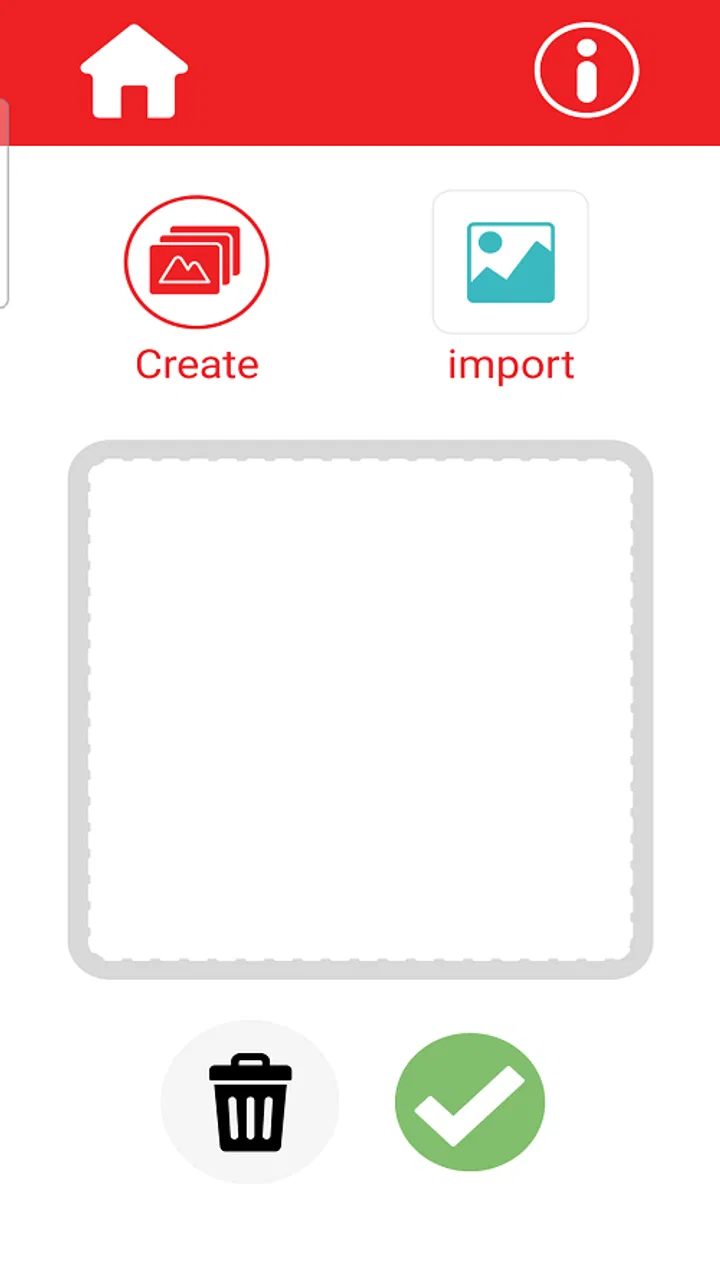
I tried Tattoo Maker as a simple way to sketch temporary tattoo ideas at home, and my first impression was that it is more useful as a quick creative tool than as a complete tattoo-design studio. It belongs to the Art & Design category, is free to use, and is aimed at anyone who wants to turn a rough idea into something printable without starting with professional design software. The app is made by HOTSALES GLOBAL TRADE LLC, and its focus is refreshingly narrow: create a tattoo concept, prepare it for printing, and see whether the result works on paper.
That narrow purpose matters in a household. I can imagine one person using it to test a small design before a party, another family member making a playful drawing for a child, or several people sharing a tablet while choosing between different shapes. It is not the kind of app I would install expecting a full illustration workflow, layered artwork, or a professional stencil pipeline. Instead, I see it as a low-commitment place to experiment. Its biggest strength is the short distance between an idea and a printable result.
How Tattoo Maker works in a shared household
When several people use Tattoo Maker on one device, I treat the screen as a shared sketchbook rather than assuming each person has a private workspace. I’d agree on whose design is being edited, keep the finished version easy to identify, and pause before printing so nobody’s draft gets mistaken for the final choice. That small routine makes the creative handoff calmer and gives the next person a clean start.
You May Also Like

 AccuWeather: Weather Radar
AccuWeather Review: A Quick, Clear Forecast for Everyday Decisions
For everyday plans, the best forecast is the one you can understand quickly. AccuWeather makes rain timing, radar, and local conditions easy to act on, with a few trade-offs.

 Hill Climb Racing
Why Hill Climb Racing Still Turns Crashes Into One More Run
A tiny car, a bumpy hill and one more upgrade: Hill Climb Racing keeps resurfacing because its simple chaos makes every near-miss feel personal.

 AliExpress - Shopping App
AliExpress Makes Global Shopping Feel Personal, but Shoppers Bear the Risk
AliExpress turns a global marketplace into a pocket-sized discovery engine. Its reach is useful, its shopping loop compelling, and its trade-offs easy to miss.

 Lords Mobile: Kingdom Wars
Lords Mobile Is a Kingdom-Building Routine, Not a Quick Match
A case-by-case verdict on the building, battles, device demands, and social commitments that make Lords Mobile rewarding for some players and exhausting for others.

 PDF Scanner app - TapScanner
TapScanner Makes Paperwork Easier to Capture, Check, and Share
TapScanner makes scanning with a phone feel less like a rescue operation and more like a dependable step in getting work done. Its capture tools are useful, though not flawless.

 Block Blast!
 Shows How Much a Puzzle Game Can Leave Out
A quiet grid game shows why puzzle players increasingly value instant clarity, repeatable skill and low-pressure play—and where the genre still needs to catch up.
More From Our News Desk
View All News


A practical weekend use case
A realistic scenario is a family preparing for a birthday gathering or a themed evening. One person wants a small symbol, another wants lettering, and a child wants a colorful animal or star. Rather than searching through finished tattoo sheets, everyone can take a turn shaping an idea in the app. The useful part is not only the drawing itself; it is the conversation around size, placement, and whether the design still looks clear when reduced for printing.
I found that this kind of shared use works best when each person treats the app as a sketch station rather than a permanent personal workspace. The next user should begin with a clear blank project instead of assuming that the previous person’s work will be separated automatically. That simple habit prevents the most common household problem: accidentally editing or printing someone else’s design.
For a group, I would keep the workflow deliberately slow at the beginning. Decide whose design is being made, choose a recognizable name for the file if the app offers naming, and save or export before handing over the device. I would not rely on memory alone, especially when several people are creating similar symbols. If the app does not make project separation obvious on your device, using separate folders in the phone’s file system or printing each person’s result immediately can make coordination easier.
What the app is good at during collaboration
Tattoo Maker is well suited to visual decisions that are difficult to make from a verbal description. Someone can draw a rough outline, try a different arrangement, and show the result to another person before committing ink to skin. That makes it useful for couples, friends, and families who want to agree on a design without passing around a dozen unrelated images.
It also gives children a creative role without requiring them to handle a complicated desktop editor. A child can suggest the central shape while an adult checks whether the lines are clean enough to print. I would still keep the final editing step with an adult, not because the app is unsuitable for children, but because printing and applying a tattoo involve decisions that need more care than drawing alone.
The collaboration is best when expectations stay modest. This is not a replacement for a professional tattoo artist’s consultation. A design that looks charming on a phone may need stronger contrast, fewer tiny details, or a different proportion before it becomes readable on skin. I use the app to communicate an idea, not to decide whether a permanent tattoo is technically safe or appropriate.
Keeping boundaries clear on one device
Shared-device use raises a practical question: whose work belongs to whom? Tattoo Maker is easier to manage when one person acts as the session owner. That person should handle the final print preparation, check the orientation, and confirm which design is being sent to the printer. Other users can contribute ideas, but the final handoff should not happen casually while several people are still editing.
I would also avoid storing personal information inside a design. A nickname or short label can help with organization, but there is no reason to add a full name, address, school detail, or other identifying text to a tattoo image. This is especially sensible when the phone or tablet is used by guests, children, or multiple members of a household.
Another useful boundary is separating creative approval from application. A child may be allowed to draw a tattoo and choose its colors, while an adult decides whether the finished temporary tattoo is suitable for the event. That division keeps the app enjoyable without turning a quick design experiment into an unplanned decision about permanent body art.
Printing is where small mistakes become visible
The promise of printing at home sounds simple, but the print stage deserves more attention than the drawing stage. Before using a full sheet, I would print a small test if possible and inspect the result under ordinary lighting. Thin lines can disappear, pale colors may look weaker than they did on the display, and text can become difficult to read when the design is reduced.
Orientation is another detail I would check carefully. Designs intended for transfer may need to be mirrored, particularly when they include words, initials, or an image with a clear left and right side. I would not assume that every printer or transfer-paper setup handles this automatically. The safest approach is to confirm the instructions for the specific paper being used and compare the preview with the intended final appearance.
For household coordination, one person should also confirm that the selected paper is suitable for the printer and intended use. The app can help create the artwork, but it does not replace the instructions supplied with transfer paper. This distinction is important: the creative file and the physical application process are connected, but they are not the same task.
Age context and trust
The app carries an Everyone content rating, which fits its basic creative purpose. I would feel comfortable letting a child explore the drawing side with ordinary supervision, especially on a shared tablet. Still, an age label does not answer every household question. Adults should decide whether children may print independently, use the printer, or apply a temporary tattoo without help.
Trust also includes checking the finished image before it is used. A child might accidentally draw a symbol that has a different meaning than intended, or type a word incorrectly. Reviewing the design together is not about restricting creativity; it is a quick way to avoid an embarrassing result at school, a party, or a family event.
If several children use the same device, I would establish a simple rule: no one deletes or changes another person’s design without permission. That rule is more useful than pretending the app itself will manage household identities. Tattoo Maker should be treated as a shared creative surface unless the device’s own user profiles or file organization provide a clearer separation.
Setup, compatibility, and the first session
The app was released on August 29, 2025, and the current release is version 1.0.5. It requires Android 8.0 or later, so an older phone or tablet may be the first obstacle in a shared household. On a compatible device, I would begin with a short test design rather than a detailed portrait. A simple icon quickly reveals how the drawing tools feel, how the preview behaves, and whether the printing workflow suits the paper available at home.
Because it is free, Tattoo Maker is easy to try without making a financial commitment. That is helpful when a family is unsure whether it needs a dedicated tattoo-design app at all. The trade-off is that a free, focused tool may not offer the depth or polish that experienced designers expect. I would judge it after completing the entire path from sketch to test print, not after looking only at the opening screen.
The app has more than ten thousand installs, with an average rating of 3.6 from around forty ratings and over twenty reviews. I read that as a sign to keep expectations realistic: there is enough interest to make the concept worthwhile, but not enough evidence for me to call it a proven professional solution. My own recommendation is to test it on the exact phone, printer, and paper combination you plan to use.
Useful design habits that are easy to miss
My first practical tip is to design for the final size from the beginning. A large image on a phone can hide weak joins and overly fine details. I would zoom out repeatedly while working and ask whether the main shape is still recognizable. If the answer is no, simplifying the design is usually more effective than adding more decoration.
The second tip is to create a strong silhouette before experimenting with color. A temporary tattoo often needs to remain understandable when viewed quickly, from a short distance, or under uneven light. A clear outer shape gives the design a better chance of surviving the print-and-transfer process than a complicated collection of small marks.
The third is to treat lettering as a special case. Words need extra checking for spelling, spacing, and mirroring. I would show the preview to someone who was not involved in making it, because a fresh pair of eyes catches reversed letters and accidental omissions quickly. This is particularly important when several household members are sharing the device and rushing to finish before an event.
A fourth useful habit is to keep one version simple and one version expressive. The simple version acts as a dependable fallback if the printer weakens fine detail. The more decorative version can be tested afterward. This gives a family a practical choice instead of forcing the final decision after the paper has already been used.
Where it fits among the usual alternatives
Compared with drawing in a general image editor, Tattoo Maker feels more direct because the goal is already defined. A general editor may provide more brushes, layers, selection tools, and export choices, but it also asks the user to understand a much larger workspace. For a quick household project, that extra power can slow down the moment when everyone simply wants to see a tattoo idea on paper.
Compared with browsing pre-made tattoo sheets, this app gives users more ownership. A child can combine familiar shapes, a couple can create a shared symbol, and a group can make matching designs without accepting an existing template exactly as it is. The compromise is that the result depends heavily on the user’s drawing ability and patience. Someone who wants polished artwork immediately may be happier with professionally prepared designs.
Compared with professional illustration software, Tattoo Maker is the lighter option. I would choose the professional route for a detailed custom piece, precise vector work, complex shading, or artwork intended for a tattoo artist to refine. I would choose this app for a quick concept, a temporary design, a party activity, or a first sketch that helps explain an idea.
Limitations I noticed before recommending it
The narrow focus can feel restrictive if you expect a complete art package. Users who routinely work with layers, advanced selections, detailed typography, or exact color control may outgrow it quickly. The app’s value depends on whether its simplicity saves time or removes tools you actually need.
Printing also introduces variables that are outside the app itself. A design can look correct on the screen and still need adjustment because of printer settings, transfer-paper instructions, or the physical size selected. I would not buy a large quantity of paper until a small test has shown that the lines, colors, and orientation behave as expected.
There is also a difference between making a temporary tattoo and planning a permanent one. Tattoo Maker can help communicate the visual idea, but it cannot judge placement, skin suitability, hygiene, or the long-term consequences of permanent ink. Anyone considering a permanent tattoo should take the finished concept to a qualified professional rather than treating an app preview as the final technical plan.
Who should use it, and who should skip it
I recommend Tattoo Maker to casual creators, parents planning a supervised craft activity, friends making matching temporary designs, and anyone who wants to turn a rough tattoo idea into a printable experiment. It is especially appealing when the household has one compatible Android device and wants a straightforward activity that does not require a paid subscription.
I would skip it if your main goal is professional tattoo production, highly detailed illustration, or exact print-color management. I would also look elsewhere if you need a clearly separated multi-user workspace for a busy household. In that situation, a broader design tool combined with organized device profiles or folders may provide better control, even if the creative process takes longer.
The app is free and suitable for Everyone, but those facts should not be mistaken for a promise that every household workflow will be automatic. Adults still need to coordinate printing, review designs with younger users, and keep each person’s work separate. That small amount of supervision is reasonable for a shared creative activity, and it prevents most of the avoidable frustration.
My household verdict
After using it as a quick design-and-print tool, I see Tattoo Maker as a practical starting point rather than a finished professional studio. I like that it encourages people to make their own designs instead of settling for the first template they find. I also like the way it can bring a household together around a concrete result: sketch, discuss, simplify, test, and print.
My recommendation is strongest for temporary tattoos and early ideas. Start with a simple design, check the preview at its intended size, verify any lettering, and run a test before using valuable transfer paper. On a shared device, decide who owns each project and let an adult manage the final print and application steps.
Tattoo Maker is worth trying when convenience and personal creativity matter more than advanced control. Its free access and approachable purpose make it easy to explore, while its limitations are clear enough to plan around. For a family craft session or a casual design experiment, I would keep it installed. For artwork that must meet professional standards, I would use it only as the first conversation, then move to a more capable design workflow and a qualified tattoo artist.
FAQs for Tattoo Maker
01What features does Tattoo Maker offer?
Tattoo Maker provides a wide range of customizable tattoo designs and tools. Users can browse through categories such as tribal, traditional, and modern styles. The app allows you to adjust size, color, and placement on virtual models to visualize how the ink will look on your skin. It also offers a sketch pad for creating unique designs.
02Is Tattoo Maker suitable for beginners?
Yes, Tattoo Maker is designed to be user-friendly, making it ideal for beginners. It features an intuitive interface with step-by-step guidance for designing and editing tattoos. Additionally, it provides tutorials and tips for those new to tattoo artistry, helping users develop their skills and creativity.
03Can I share my designs from Tattoo Maker on social media?
Absolutely, Tattoo Maker includes social media integration, enabling users to share their creations directly from the app. You can showcase your designs on platforms like Instagram, Facebook, and Twitter. This feature not only helps in gaining feedback but also connects you with other tattoo enthusiasts and artists around the world.
04Is there a cost to download and use Tattoo Maker?
Tattoo Maker is available for free download on both Android and iOS platforms. While the basic features are free to use, it also offers in-app purchases. These include premium design packs and advanced tools for a more comprehensive experience. Users can choose to purchase these to enhance their creativity.
05How does Tattoo Maker ensure realistic previews of tattoos?
Tattoo Maker uses advanced augmented reality technology to provide realistic previews. By using your device's camera, it overlays the selected tattoo design onto your skin in real-time. This feature helps users visualize how the tattoo will look when applied, ensuring satisfaction before committing to the actual ink.
Pros
- Highly customizable designs.
- User-friendly interface.
- Extensive tattoo library.
- Realistic preview feature.
- Offline mode available.
Cons
- Limited font options.
- No social media sharing.
- Occasional app crashes.
- In-app purchases required.
- Ads can be intrusive.

Tattoo Maker
Gallery